

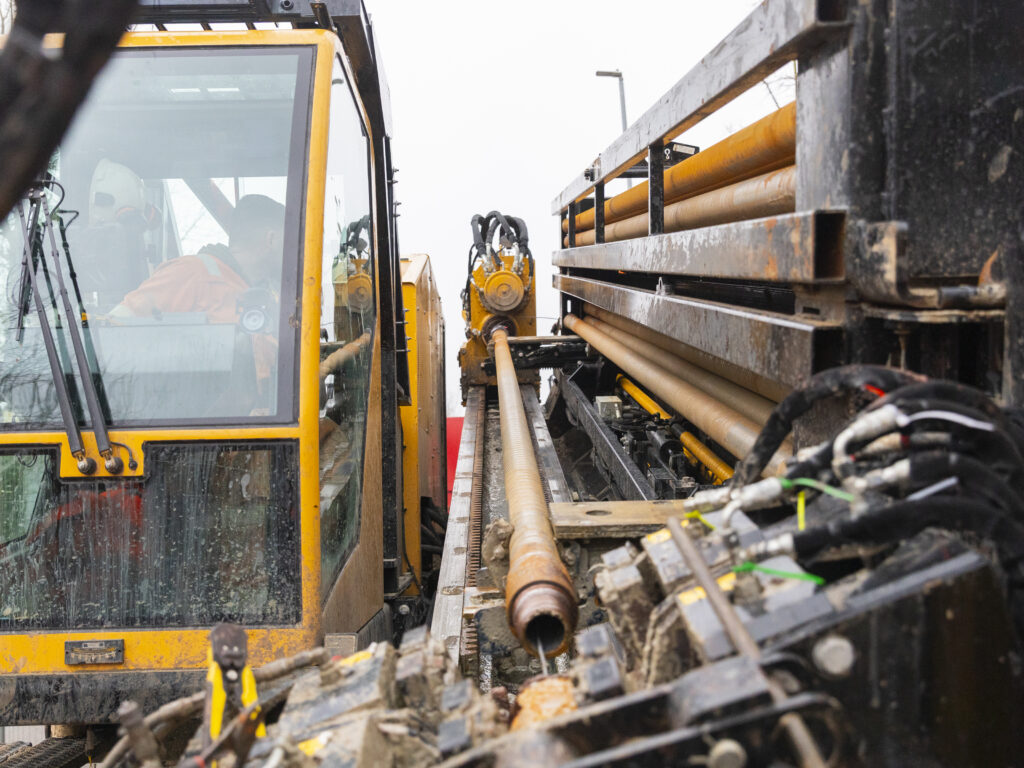
This Bytesized piece explores Horizontal Directional Drilling (HDD) in action – a quick, practical insight into one of the most effective low‑impact installation methods in the industry.
What is Horizontal Directional Drilling (HDD) and why is it used?
HDD is widely used by civil engineering contractors to install underground utilities without disturbing the surface, making it ideal for congested or sensitive environments. By drilling a guided underground path and pulling pipes or cables through in one continuous section, HDD minimises disruption, reduces environmental impact, and keeps infrastructure running as normal.
How was HDD applied on this high-constraint project?
A recent JSM project demonstrates this in action. The team was tasked with installing a high‑voltage cable route beneath a corridor packed with constraints, including dense utilities, environmentally sensitive features, operational areas, and live traffic movements. Traditional excavation wasn’t feasible.
How did engineering expertise ensure safe delivery?
Using gyro‑guided steering, staged drilling, real‑time monitoring, and strict environmental controls, the team delivered a minimal‑surface‑impact installation, completed in under five days. All surrounding operations, access routes, and habitats remained fully protected throughout. The project reflects best practice in civil engineering delivery within complex utility environments.
Why is HDD a preferred method for modern infrastructure projects?
This case study highlights why HDD has become a preferred method for modern infrastructure delivery: precision, safety, speed, and minimal disruption, even in the most challenging environments.